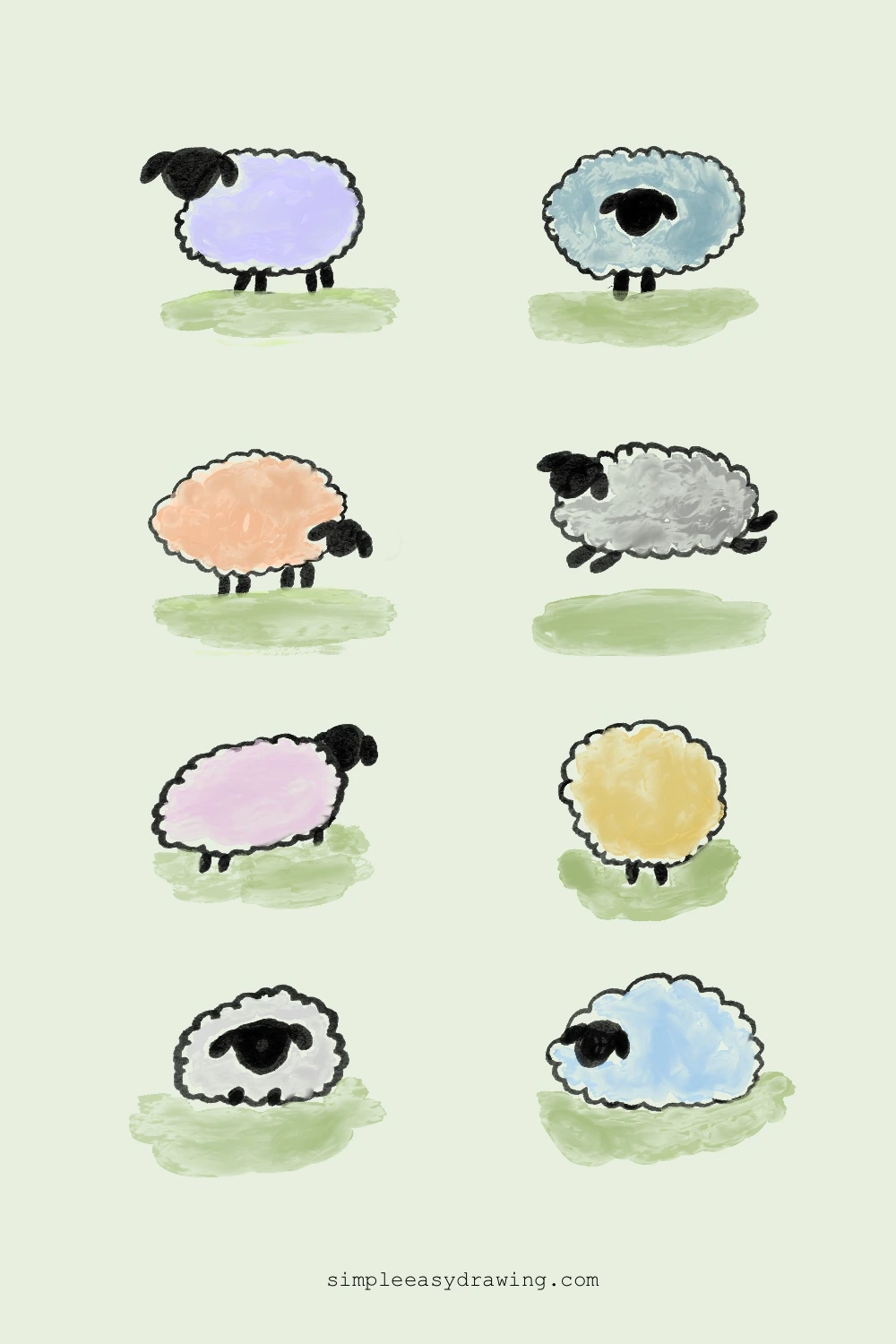
Hi everyone, welcome to Simple Easy Drawing! Today, we’re going to draw a sheep. Not just one sheep. I’ve drawn eight different versions of a sheep, each with a slightly different pose or angle. Yep, eight ways to draw the same animal!
Why sheep? Well, I think sheep are really cute. I find drawing them very relaxing. You don’t have to worry about getting every little detail right, either. A few simple shapes and some curly wobbly lines are enough to draw them.
I think this could be a fun drawing activity for anyone and would be perfect for journal drawing ideas. You don’t need to be an experienced artist to give these a try.
If you’ve been following my drawings for a while, you might also know that I have a detailed directed drawing tutorial for a sheep. It’s one of my most-loved tutorials on the blog, and you can follow it if you want to learn how to draw a simple sheep from scratch. This post is a little different. Instead of going through one drawing step by step, I wanted to explore how many different ways we can draw a sheep.
I played around with their shapes, poses, and colors. Let’s take a closer look at each one!
1. A sheep standing on the grass
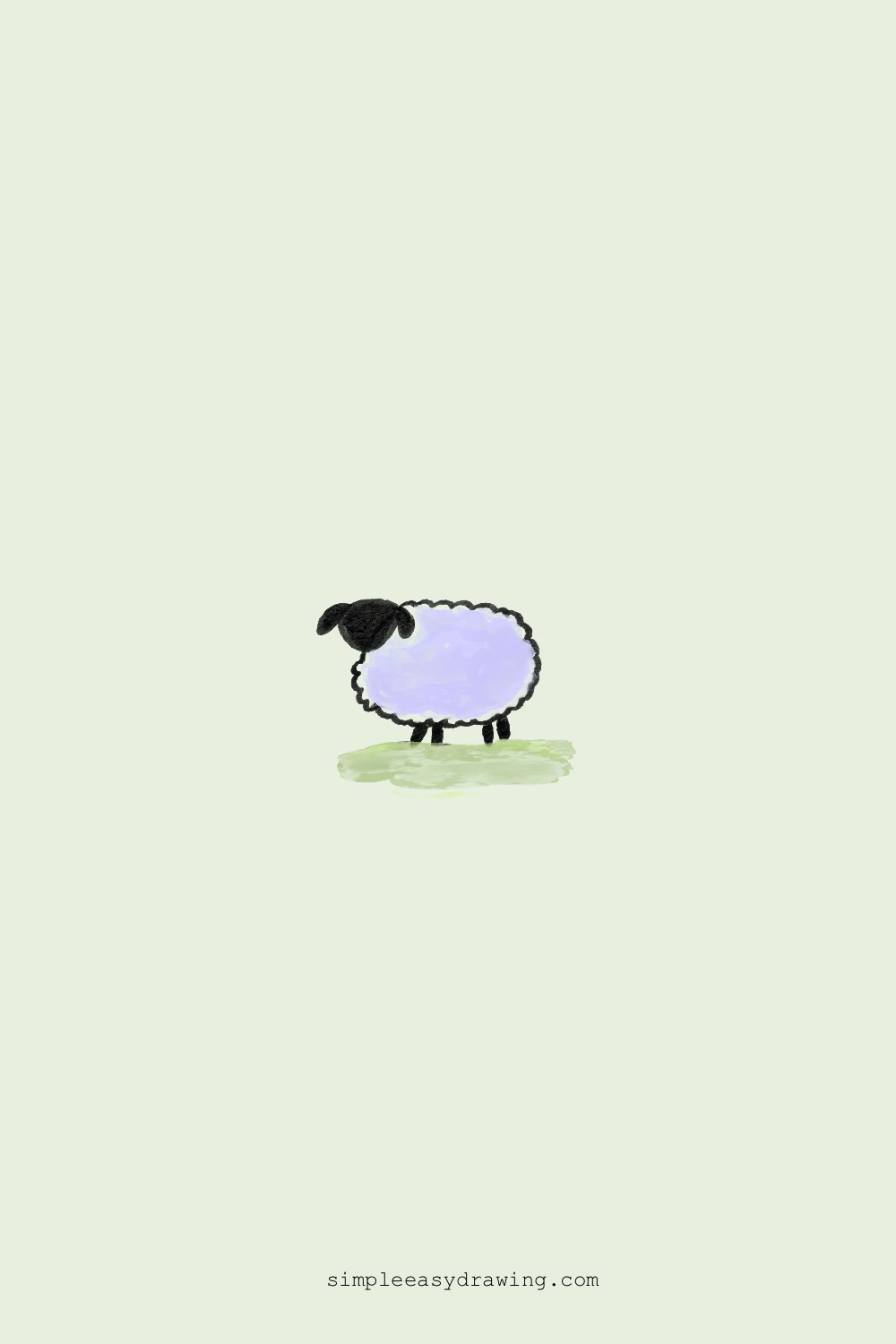
Let’s start with the simplest one. This is just a little sheep standing on a patch of grass, minding its own business.
I think this is the easiest version to try if you’re drawing a sheep for the first time. The body is a fluffy oval, the head sits near the top, and the little legs keep everything in place. You don’t need to draw every curl of wool perfectly. Just make a few small bumps around the body, and you’re good to go.
I like how simple this one looks. You can add a little patch of green underneath, just as I did, or leave the sheep standing on its own.
2. A sheep facing you
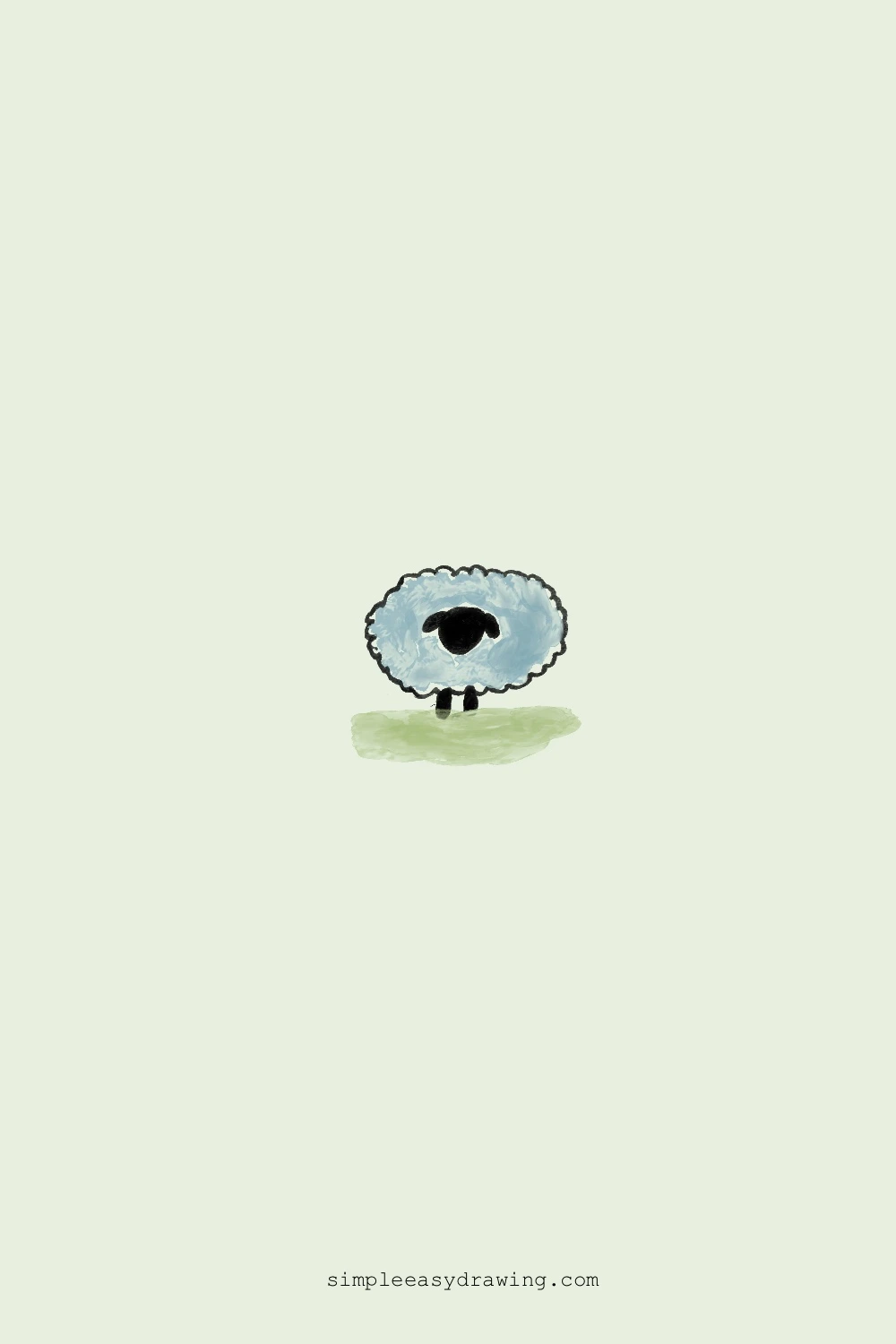
For the second drawing, I wanted to show the sheep from the front. Instead of seeing its body from the side, we’re looking straight at its face.
This changes the whole look of the sheep, even though we’re still drawing the same animal. The fluffy body becomes more rounded, and the face sits right in the middle. I kept the legs short and simple so the sheep would still look soft and fluffy. Focus on the round shape first, then add the face and those tiny feet. You can make the face a little bigger or smaller depending on the kind of sheep you want to draw.
3. A sheep bending down to eat grass
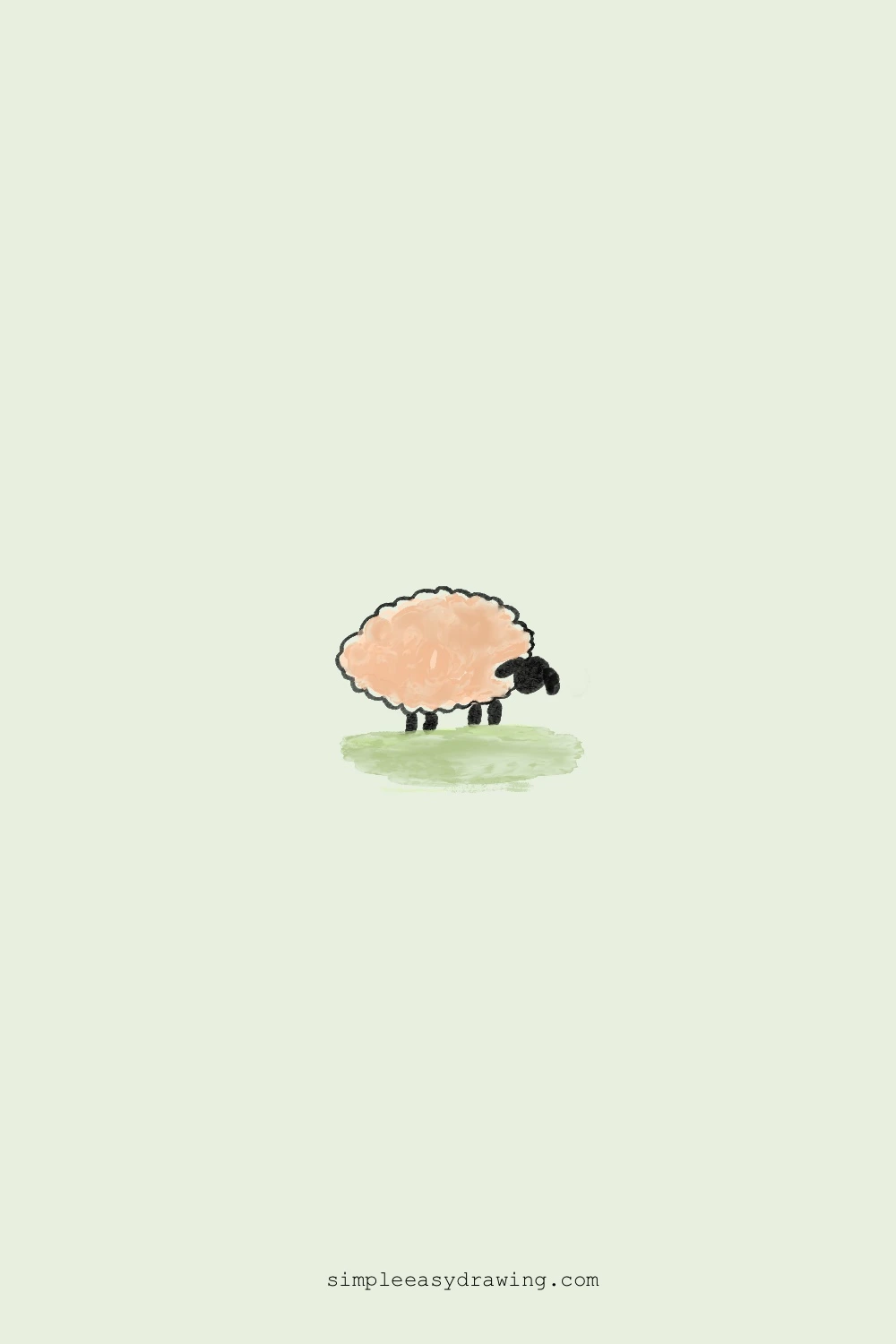
Now this one is supposed to be a sheep bending down to eat some grass. I could probably have bent the head a little further down, but that’s okay! You can play around with this in your own drawing.
Feel free to move the head toward the left or the right, whichever feels more comfortable to you. There’s no need to follow my sketch exactly. The idea is simply to make the sheep look as though it’s lowering its head to nibble on some grass.
You can keep the body almost the same as in the first drawing and add a few blades of grass underneath. If you’re drawing this with kids, you could even imagine what the sheep might be eating or draw a little field around it. Sometimes, giving a drawing a tiny story of its own makes the activity even more fun.
4. A sheep running around
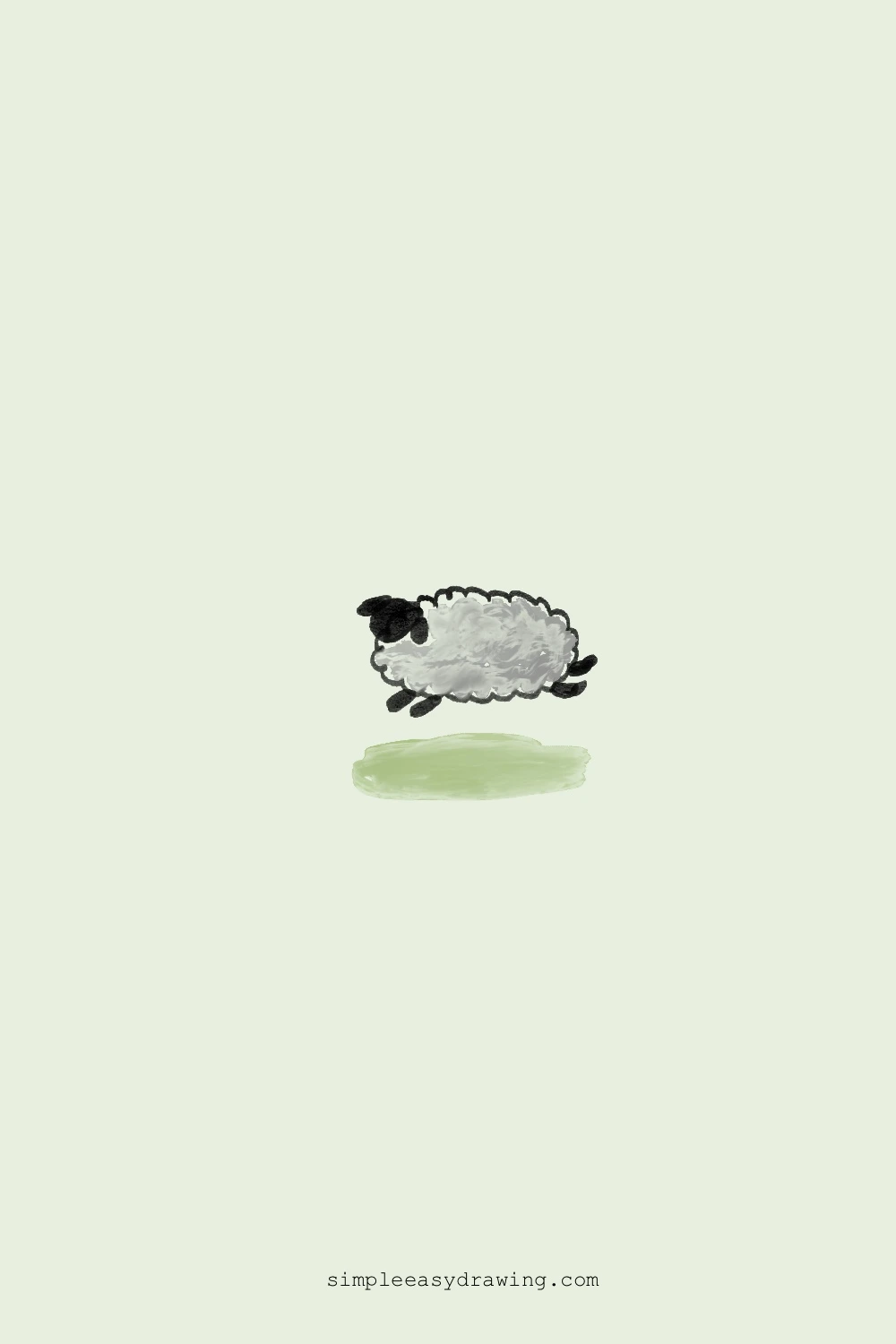
This is probably my favorite pose of the bunch. It’s a little sheep running around, with its legs stretched out as if it’s having the happiest day ever.
I imagine this sheep running through a big, open field, with plenty of space to roam around. Maybe it’s playing with the other sheep, or maybe it has simply decided that walking is too boring today!
When you draw an animal in motion, you don’t have to make every part perfectly realistic. The position of the legs and the angle of the body can help suggest movement. Even a simple drawing can feel lively when you give it a pose that looks different from standing still.
Try drawing the body at a slight angle and moving the legs away from their usual standing position. You can even add a few short lines behind the feet to make it look as though the sheep is moving quickly.
5. A sheep looking away
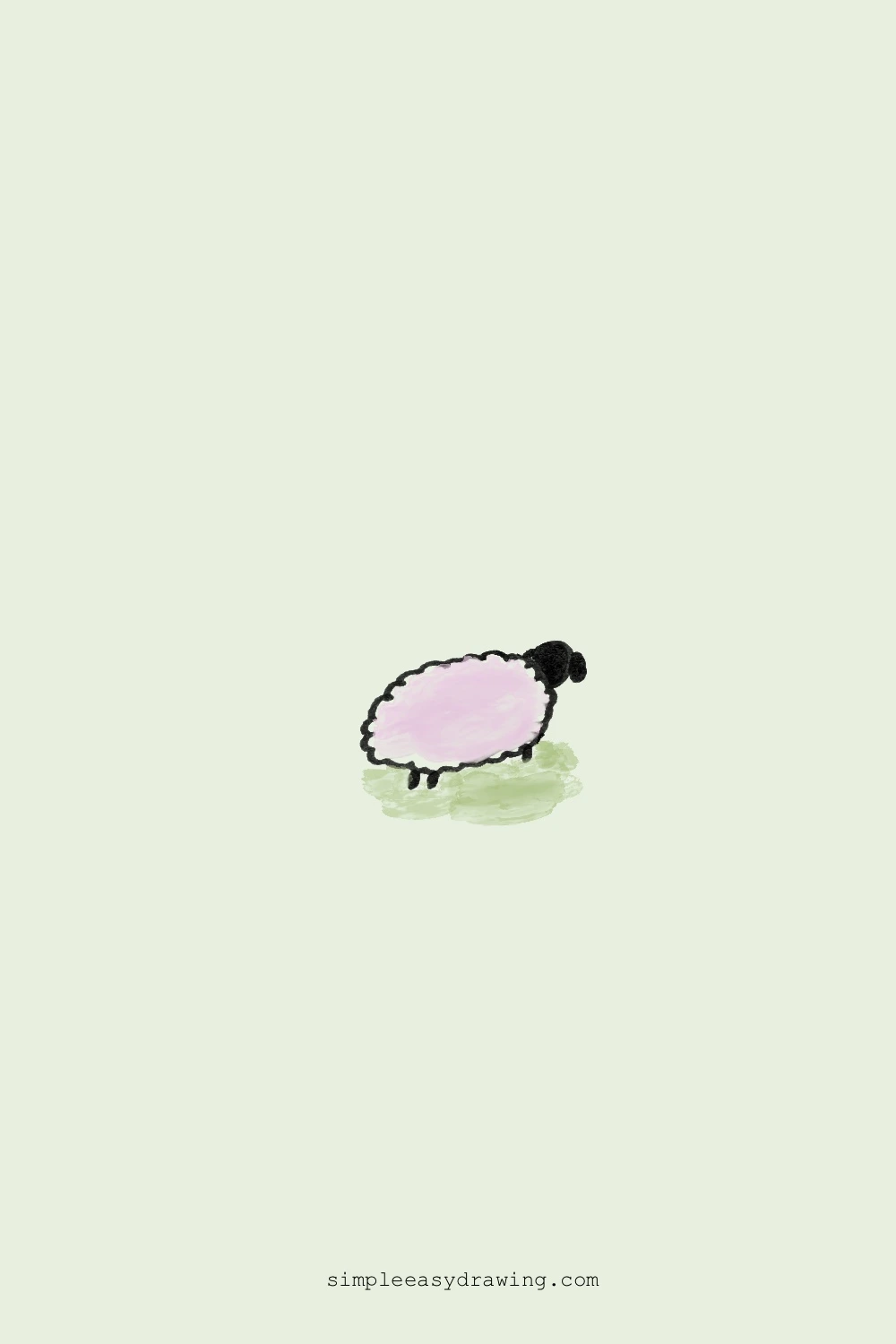
For the fifth drawing, I wanted to show a sheep looking far away.
This pose is a little different because we’re seeing the body from the side, but the head turns toward the back. That gives the sheep a curious look, almost as if it has heard someone calling its name.
You might notice that I’ve only drawn three legs here. That’s intentional! The fourth leg would be hidden from this angle, so I left it out to help suggest the position of the body. You don’t always have to show every part of an animal in a drawing. Sometimes, leaving something out actually makes the pose easier to understand.
Try this one if you want to practice drawing animals from different angles. Start with the body, then place the head so that it looks back instead of straight ahead. Don’t worry too much about getting the angle just right. A little experimentation is part of the fun.
6. A sheep from behind
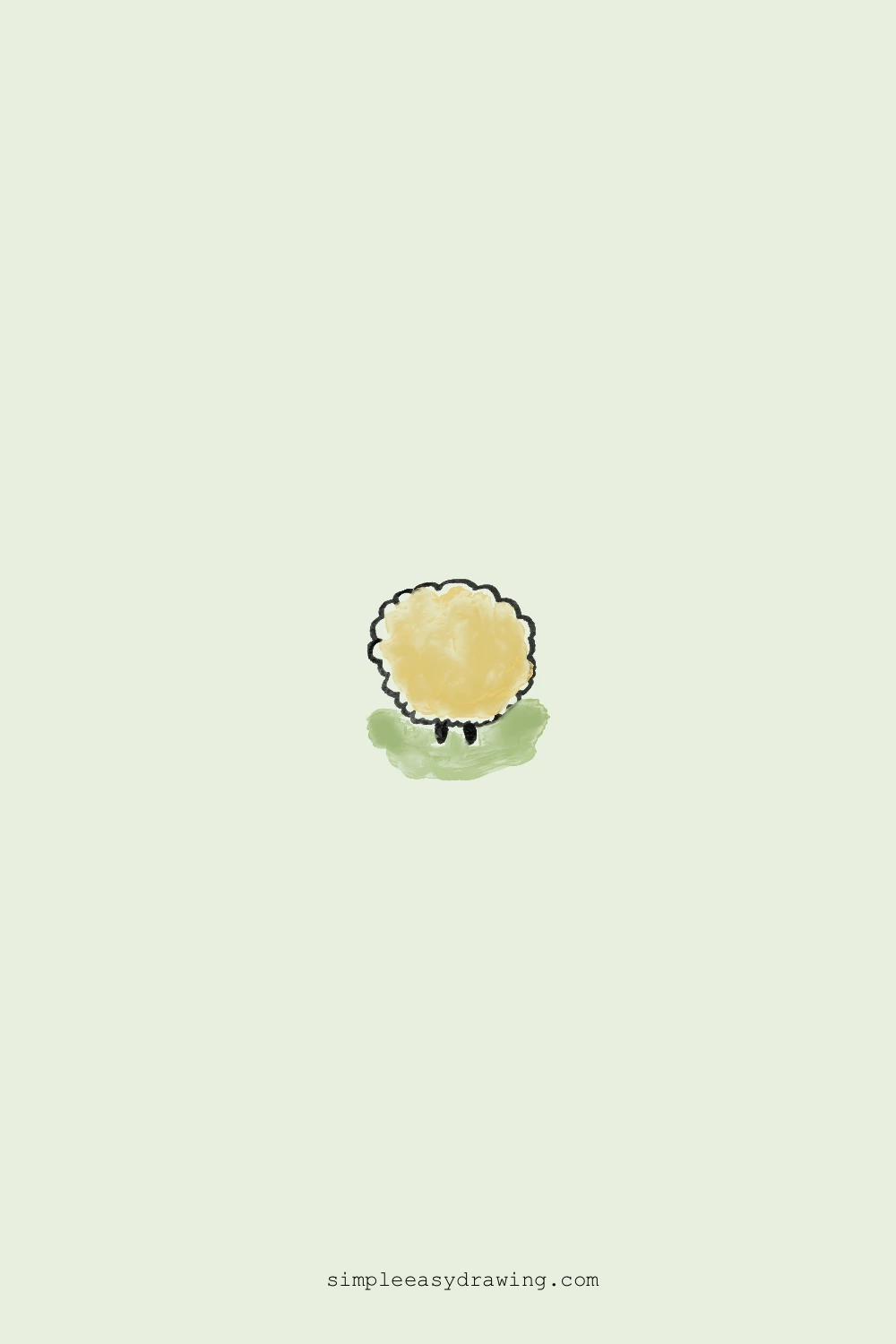
How about a sheep with its back facing us? Isn’t it funny and cute?
This is probably the simplest one to recognize once you notice the little legs underneath the fluffy body. There’s no face to draw here, just a big, rounded patch of wool.
You could imagine this sheep standing quietly in a field, or you could make it look as though it’s bending down to eat. I wanted to keep this version simple, so I focused on the rounded shape of the wool and the two visible legs.
Another good reminder that you don’t always have to draw an animal facing forward to make it recognizable. A different view can be just as interesting, and sometimes it’s even easier to draw!
7. A sheep sitting down
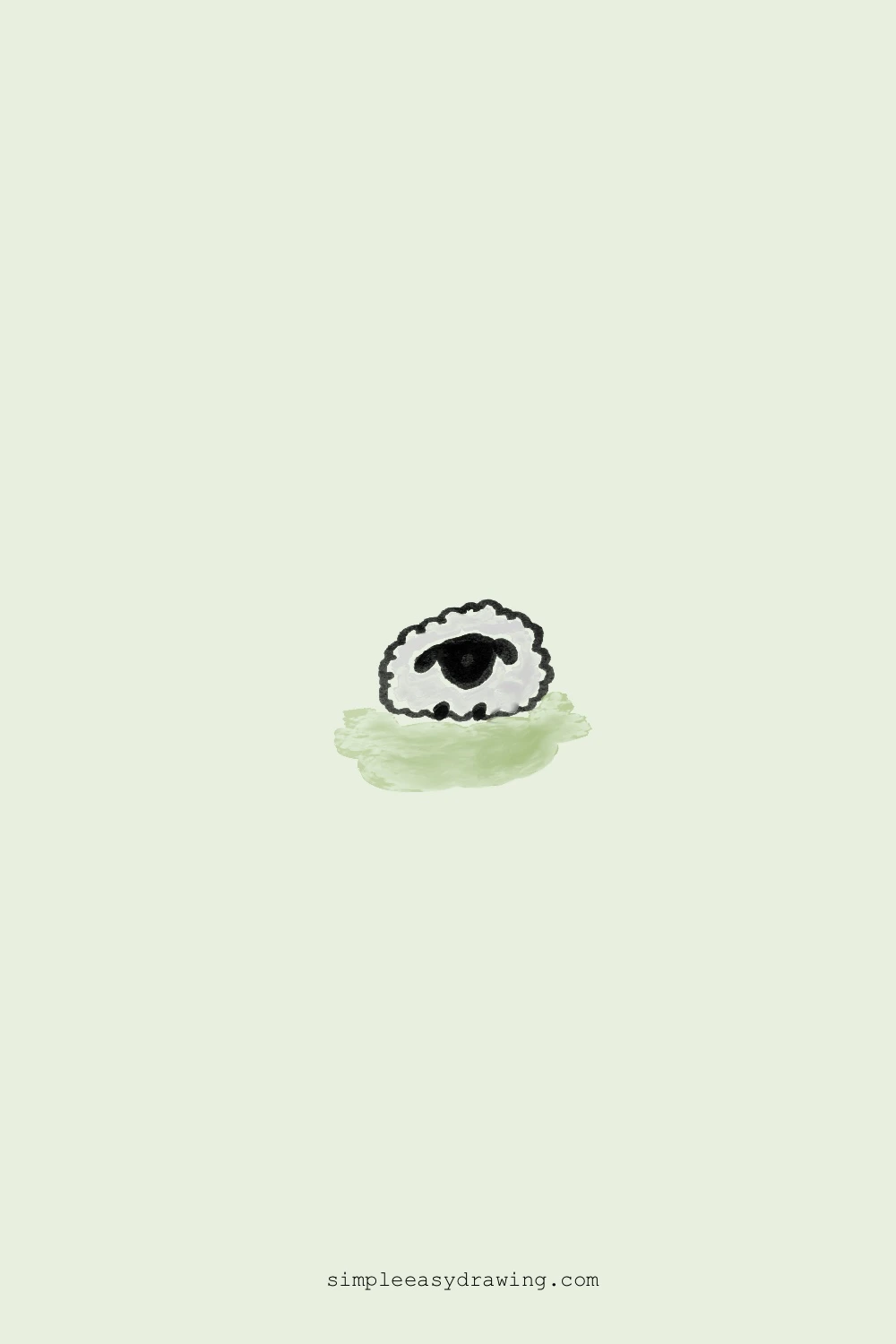
This sheep is facing forward and sitting down. It’s a simple pose, but I think it looks rather sweet. Almost looks like a baby lamb (a younger sheep).
Instead of drawing four separate legs, I used tiny dark shapes at the bottom to suggest its feet. That makes the sheep look as though it’s resting comfortably on the grass.
You can start with a rounded, fluffy shape for the body and add the face in the center. I also think this would make a cute addition to a page full of little farm animals.
8. A sleepy sheep resting sideways
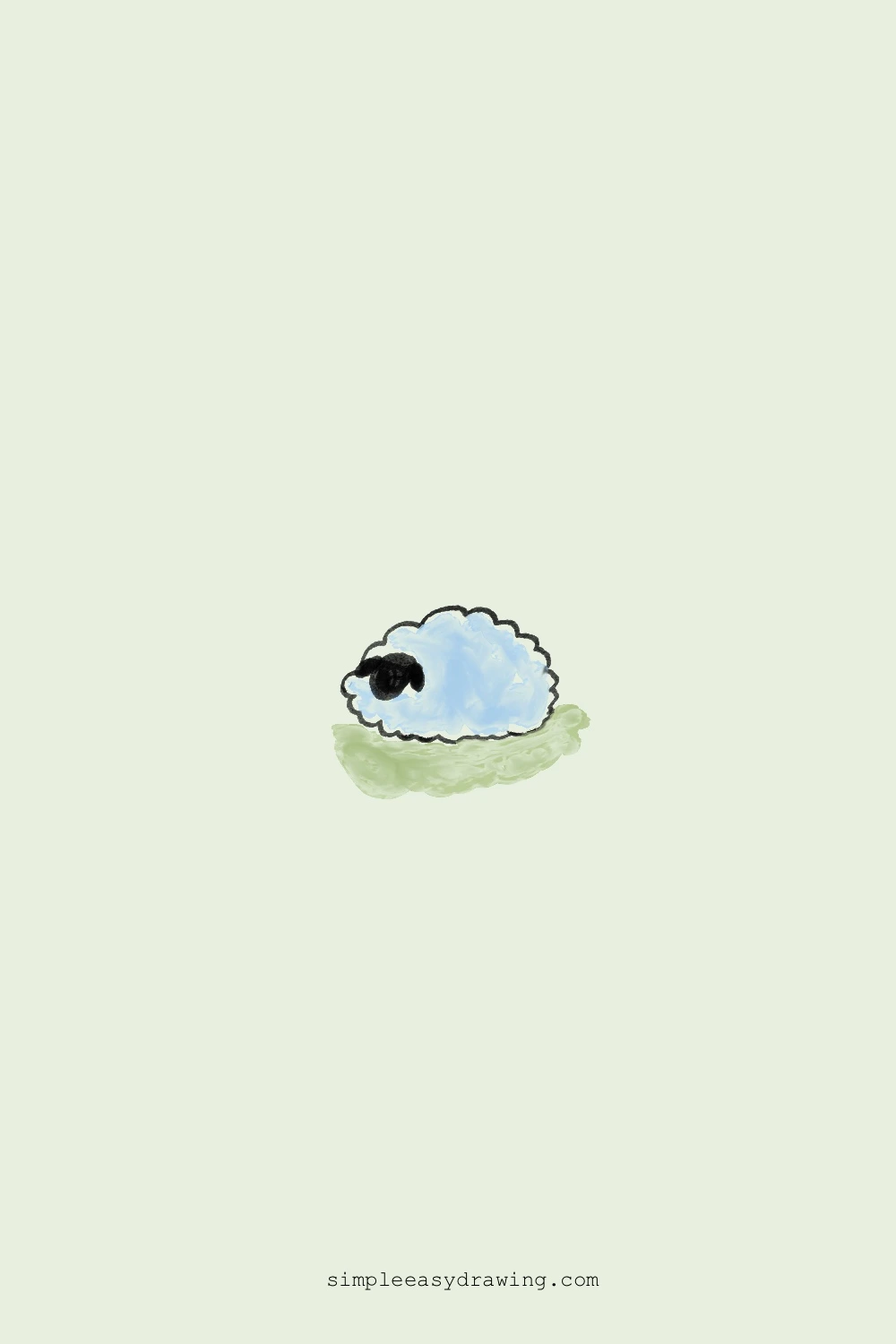
For the last drawing, we’re drawing a sleepy sheep on the grass.
I wanted this one to feel calm and peaceful, almost as though the sheep has found a comfortable spot in the grass and decided to stay and sleep there for a while. I left out the legs to keep the shape simple and give it that relaxed look.
You can try making the body a little wider and lower than the standing sheep. That helps suggest that it’s sitting down. The head can be small and tucked close to the body, with the fluffy outline doing most of the work.
I like how different this looks from the first sheep, even though the basic shape is almost the same. It’s a nice way to finish our little collection of sheep drawings.
Which sheep is your favorite?
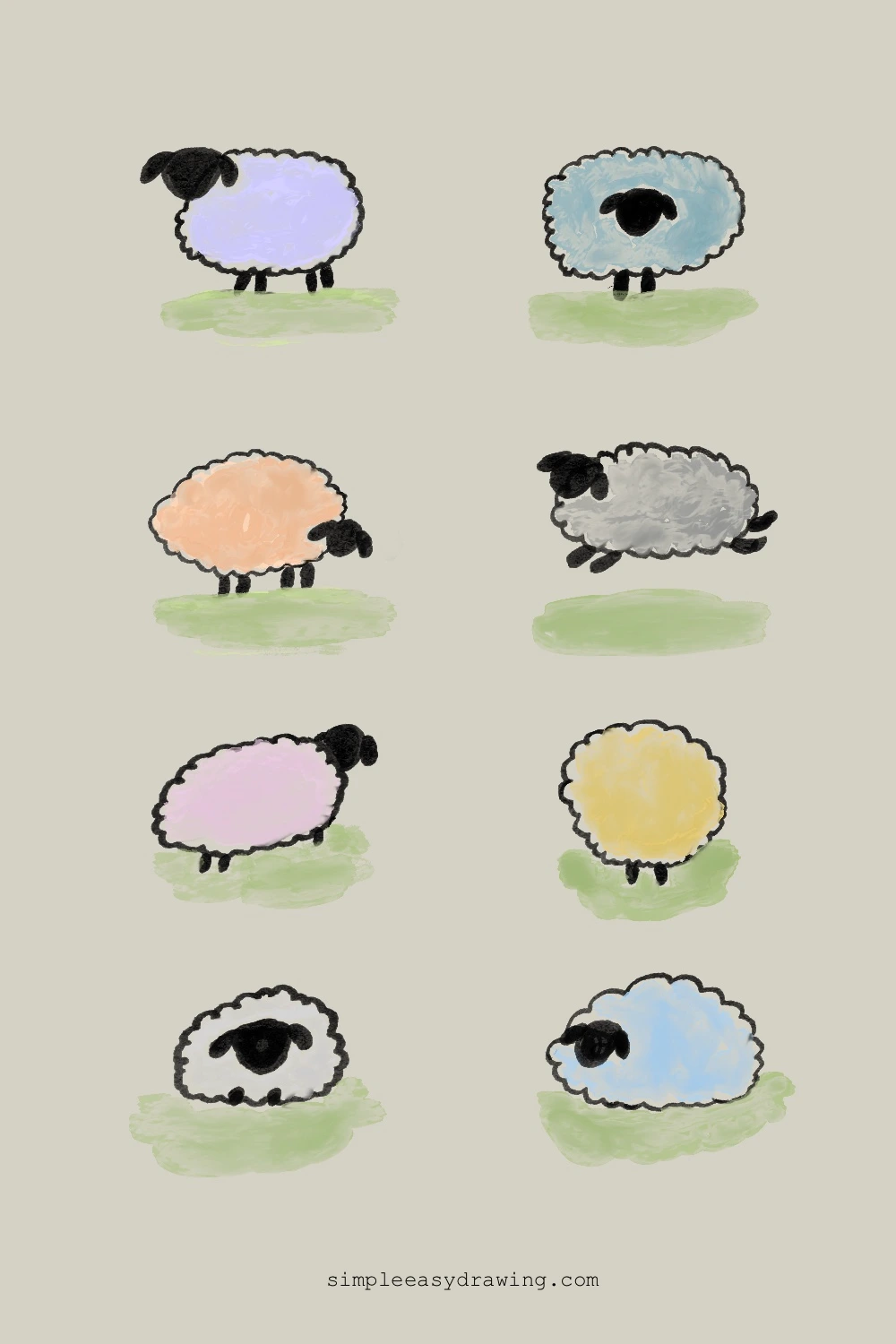
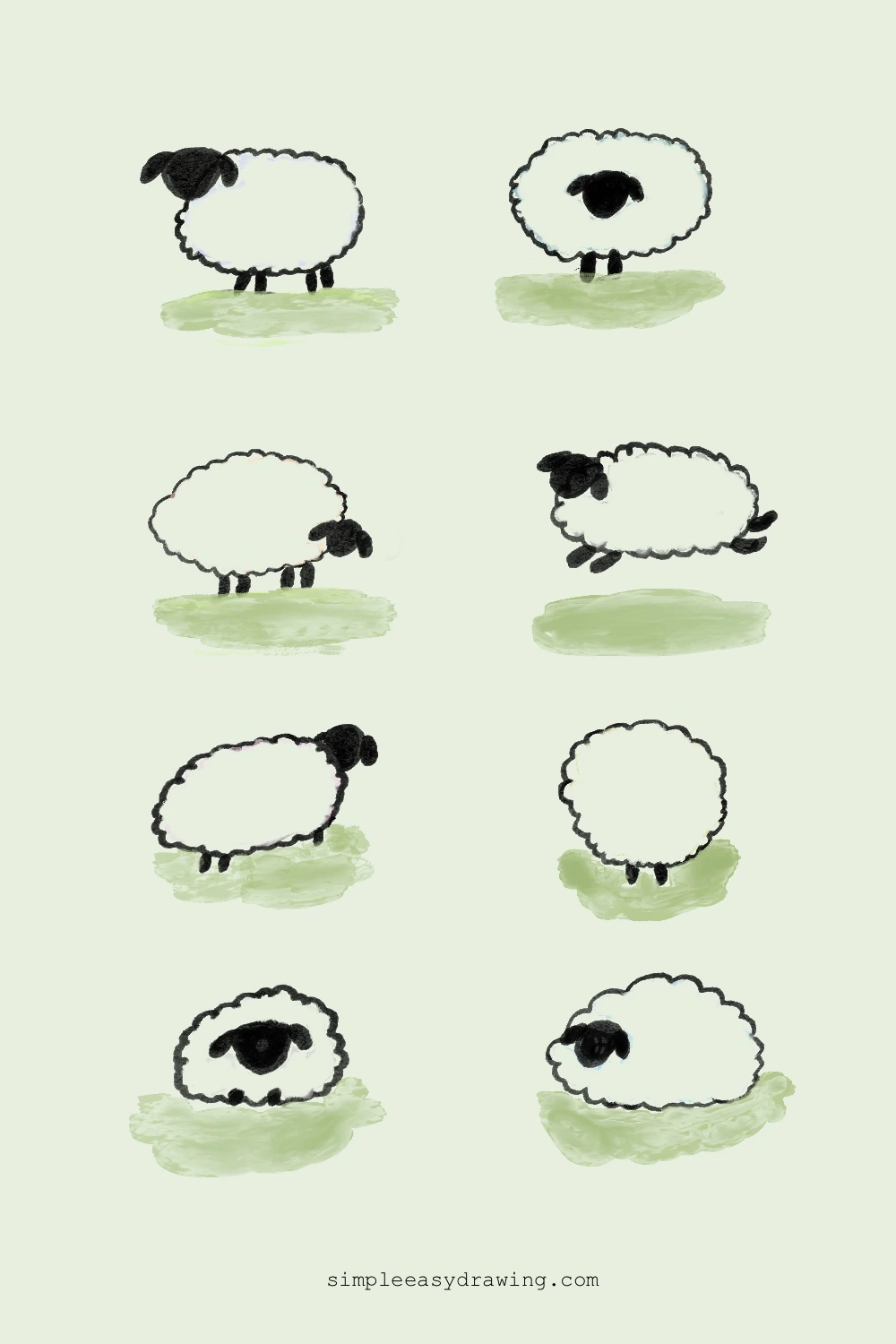
And there we have it! Eight different ways to draw a sheep, all from the same simple idea.
One thing I enjoyed while making these was playing around with the colors. I gave some of the sheep a little yellow or orange tint and used different shades of white, purple, and blue for the wool. I think these little touches give each drawing its own personality.
Of course, you don’t have to add color if you don’t want to. You can leave your sheep plain, use just a pencil, or try whatever colors you have nearby. There’s no single right way to do this.
If you try this activity, I’d love to know which of the eight sheep you like best. Do you prefer the one running around, the little sheep looking back, or the one sitting quietly in the grass?
You can even try drawing all eight yourself and see how different you can make them look. Experiment with the body shape, try different poses, or give each sheep a different expression. You might be surprised by how much variety you can get from such a simple subject.
And if you make your own versions, I’d love to see them! Feel free to share your drawings with me. I may even feature them here on the website, which would be lovely.
I have lots more fun and easy drawing tutorials for you to explore, so feel free to look around Simple Easy Drawing for your next drawing idea. Thank you for drawing with me today, and I’ll see you in my next tutorial!